Growing and Grinding Your Own Wheat: A Beginner’s Guide
Making flour on a small scale isn’t a common practice, but it’s possible. Join Briana Yablonski to learn how to grow and grind wheat at home.
Growing and Grinding Your Own Wheat: A Beginner’s Guide
Making flour on a small scale isn’t a common practice, but it’s possible. Join Briana Yablonski to learn how to grow and grind wheat at home.
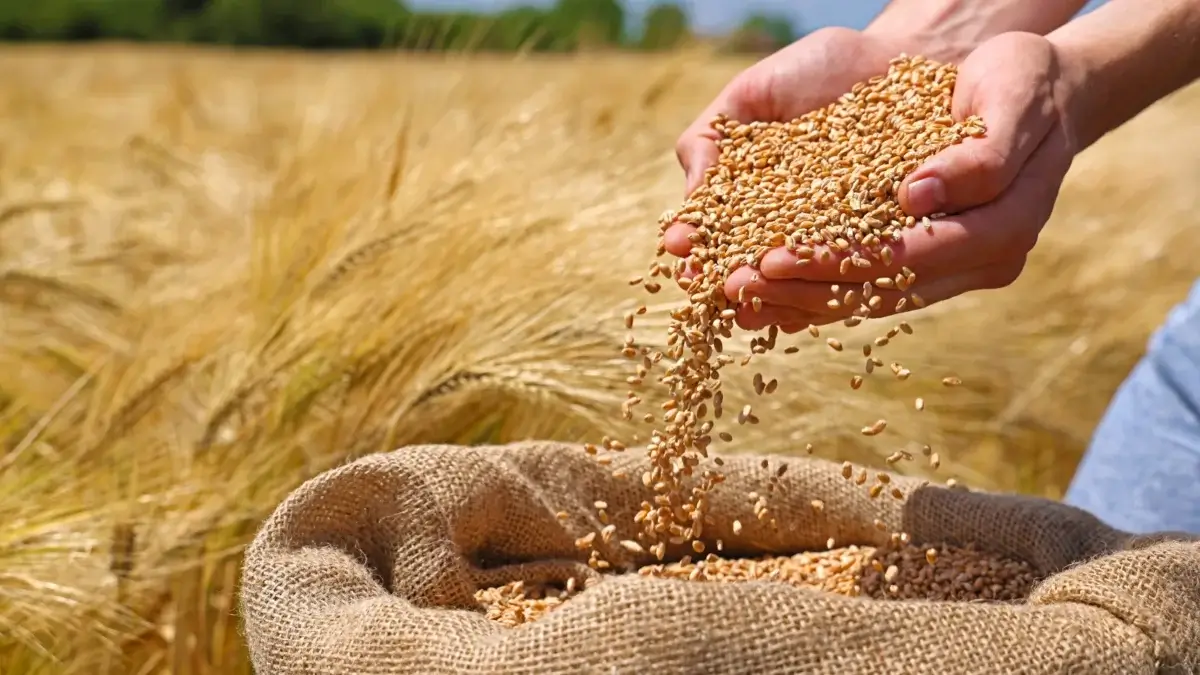
When you think of lowering your grocery bill with homegrown food, wheat probably isn’t the first thing that pops into your mind. Tomatoes, lettuce, and perhaps a flock of backyard chickens often make the list, while this staple crop is often left to large-scale growers.
The truth is that you can grow enough to make a few loaves of bread even if you only have a small backyard. Scaling up to a few hundred square feet can provide enough grain to supply your family with its yearly flour needs.
Still, making your own flour, starting from seed, is a new territory that can be intimidating to enter. Knowing some basic information about growing and grinding wheat will simplify the process and give you the confidence to get started.
Choosing the Right Type

Just like with tomatoes and lettuce, there are dozens of different types of wheat. It’s fascinating to explore the new varieties that seed breeders are creating to withstand changing local environments, but the variety can also be overwhelming.
If you want to grow it for the first time, know that there are three main distinctions within varieties: soft versus hard, red versus white, and spring versus winter.
Soft wheat contains a lower amount of protein, also known as gluten, and produces flour that works well for cakes, cookies, and other baked goods. Hard wheat contains more protein, so it’s preferred for yeasted breads.
Red wheat has a more pronounced flavor and often packs significant protein. White wheat has a mild taste and lower protein content.
Spring wheat is sown in the spring and harvested in the fall. Winter wheat is sown in the fall and then harvested the following summer.
When and How to Plant

The best time to plant depends on your location and whether you’re growing a spring or winter variety.
You can plant spring wheat as soon as the soil warms to 40°F in the spring. The plants can tolerate a light frost, so it’s fine to plant before your last predicted frost date. Avoid planting too late in the spring, as this will require young plants to endure high temperatures that can be stressful.
Mid-fall is the ideal planting time for winter wheat. Sowing the seeds a few weeks before the predicted first frost date is ideal.
Planting in neat rows makes cultivation and harvesting easier, making it the recommended method. Space rows four to ten inches apart with seeds spaced between one-half and one inch apart. A push seeder makes sowing the seeds much quicker, but you can also plant the seeds by hand.
If you don’t want to deal with planting seeds in rows, you can broadcast the seeds across an open area. Scatter three to four pounds of seed per 1,000 square feet, then lightly rake the surface to incorporate the seeds.
Caring for Your Plants

Once wheat has sprouted, it won’t need much care. The plants can tolerate a fair amount of drought and don’t require any fertilizer once they’re in the ground. Keep an eye on the plants and look for the seed heads to begin forming.
At first, the head will flower, a stage called anthesis. Upon close inspection, you’ll see tiny yellow anthers sticking out from the sides of the heads. After pollination occurs, the plants will begin forming the grains that you’ll eventually harvest.
Harvesting

You can harvest when the grain heads are fully formed and the plants have dried. The stalks and seed heads will be golden brown and hard. If the wheat berries are still chewy, it’s not ready! It’s best until the crop has fully dried, but if you’re expecting a long spell of rainy days, it’s okay to harvest the grains and further dry them off the plants.
When you’re growing on a small scale, using a scythe is the easiest and most ergonomic way to harvest. However, you can also use a sickle, sharp knife, or pair of pruning shears. The end goal is to cut the stalks so they’re at least a foot long, but cutting closer to the ground equates to more straw and requires you to spend less time dealing with the leftover residue.
Processing the Grain

Once you have the wheat heads, it’s time to remove the grain from the stalk and husks, a process known as threshing. Large-scale growers use machines known as threshers to complete this task, but you can also complete it by hand.
First, remove the grain from the seed head. You can do this by placing the seed heads in a paper bag and hitting them, whacking the seed between two tarps, or using other creative methods. When you’re done, you’ll be left with a mess of grain and chaff.
Next, it’s time to winnow. Slowly dump your grain and waste over a running fan. The heavy grain will drop to the ground while the air blows away the lighter chaff and straw. You may need to complete this process several times to achieve completely clean grain.
Grinding Into Flour

You can store and eat whole wheat berries, but many people are interested in grinding their homegrown flour. Wheat berries are close to rock hard, so you need a specialized mill to complete the job. You can find numerous countertop grain mills that allow you to grind your wheat as you want to use it, so homegrown flour is accessible from start to finish, even in a small space.
Honoring the Ukrainian Roots of American Wheat
‘If you’ve ever eaten a slice of bread, you can thank Ukraine.’

