Silvopasture: Why We Need Trees on Grazing Land
Learn about the practice of silvopasture and how it can improve revenue, forage quality, and climate resilience on your farm.
Silvopasture: Why We Need Trees on Grazing Land
Learn about the practice of silvopasture and how it can improve revenue, forage quality, and climate resilience on your farm.
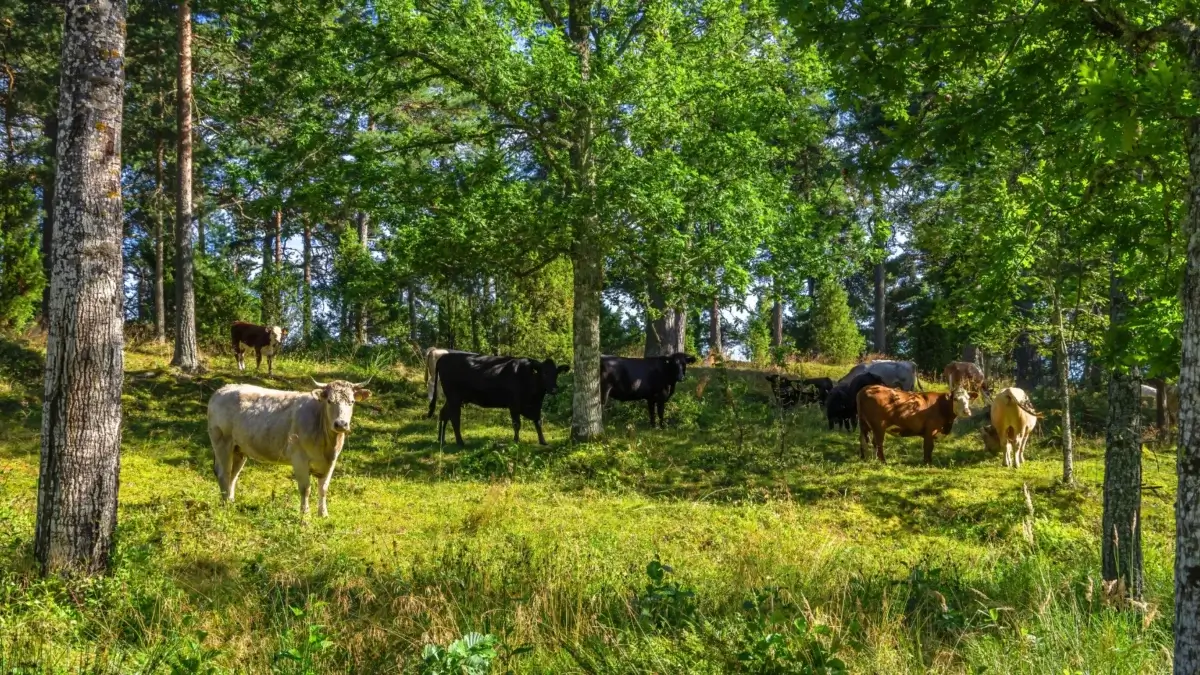
In a world facing climate shifts and higher costs, savvy farmers are rediscovering a long-standing practice. Silvopasture – the intentional integration of trees, forage, and livestock – offers a practical solution in semi-forested areas.
Unlike conventional pasture systems that rely solely on grasses and other forage plants, silvopasture creates a three-pronged system that includes trees and tree products. Farmers who adopt silvopasture boost production and build resilience economically and ecologically. This practice delivers impressive results that conventional industrial systems can’t match.
The History

Silvopasture is an ancient practice long carried out by people all over the world. In North America, we have indigenous peoples to thank for this systemic view of pastoral lifeways. The setup begins by clearing tree density. Canopies in these cases are thinned either by cutting or through the use of controlled fire.
Overgrazing in 19th-century North America made the practice a necessity among settler colonies, though it was most common in Canadian colonies. In America, silvopasture was most popular among people in the southeast pines. In Mexico, it is still used to reforest areas taken over by grazing.
It wasn’t until the 1940s that silvopasture became a formalized practice recognized by institutions across North America. Today, numerous agricultural, governmental, and academic bodies promote silvopasture as a viable mode of animal husbandry and farming. It is also an incredible way to align the pasture with local ecological needs.
The Triple Bottom Line

Adding trees to grazing land is good stewardship and good business. Well-managed silvopasture systems can increase net farm income when compared to conventional ranching. By having both trees and livestock, there is potential for double the revenue.
Trees provide timber, fruits, nuts, or specialty products like maple syrup while simultaneously supporting livestock. Black walnut silvopasture systems, for example, generate more money per acre from high-quality timber or nuts at maturity while still maintaining the forage production found in open pastures.
During drought years when grass suffers and livestock have to be sold, trees continue growing and providing. This resilience translates to more stable cash flow and reduced risk.
The third and most important aspect of silvopasture is its capacity to support the landscape and local ecosystems. If farmers opt for native trees and forage, the pasture becomes a restoration site. Water and carbon are sequestered.
Native insects keep trees, grasses, and forbs producing, limiting the need for seeding in the following year. The longevity provided by restoration efforts further reduces risks.
Trees as Weather Insurance

Extreme weather events cost American farmers billions annually. Silvopasture provides built-in weather insurance. During summer heat waves, cattle in these systems spend less time seeking shade and more time foraging and grazing. This directly impacts their quality of life and promotes better meat and dairy products.
Temperatures under tree canopy can be 6-25° cooler than they are in open pasture during peak summer heat. This results in less heat stress. The shade extends the growth cycle of cool-season grasses, promoting longer grazing periods and improved breeding success for livestock.
In winter, properly planted windbreaks reduce windchill by 50% or more and reduce wind velocity by as much as 70%. This reduces the need for purchased feed and provides better conditions for livestock through cold seasons. And pasture plants benefit from the fertilization provided by manure, creating a mutually beneficial system that feeds back into itself.
What Happens Below the Soil

The most dramatic changes in silvopasture happen in the soil. Tree roots penetrate lower layers, bringing nutrients up and making them available to forage plants, which livestock consume. This has a nutrient-pumping effect that lessens fertilizer dependency and builds topsoil faster. Reduced need for fertilizer means less runoff and healthier local waterways.
Research demonstrates that silvopasture systems build soil carbon at higher rates than conventional pastures. Increased carbon sequestration improves water infiltration, with silvopasture plots absorbing rainfall at rates faster than treeless pastures. During heavy rains, increased vegetation prevents erosion, and during drought, it means more moisture available to forages.
Livestock also benefits from improved soil composition. The diverse root systems in silvopasture support more varied microbiomes, which research links to reduced parasite loads in grazing animals. Good parasite management reduces deworming treatments and their associated costs, while slowing the development of resistant parasites that come from excessive use of antiparasitics.
Higher Forage Quality

Contrary to popular belief, properly managed silvopasture doesn’t mean less forage. While total dry matter production might decrease under moderate tree canopy, the nutritional quality often improves significantly.
Studies show that grasses grown in partial shade contain more protein and are easier to digest than the same species grown in full sun. This difference occurs because shade-grown forages develop thinner cell walls, making them more digestible and nutritious when they’re dry. This quality is heightened when native forbs and grasses are grown, as opposed to non-native ones.
Many tree species used in silvopasture, particularly leguminous trees like black locust or honey locust, fix nitrogen in the soil, making it available to surrounding forage. This reduces the need for potentially environmentally detrimental fertilizers while improving forage protein content. Additionally, shade extends the growing season of cool-season grasses, and bridges gaps that cause problems in conventional grazing.
Getting Started With Silvopasture

Starting your own silvopasture doesn’t require enormous investment up front. The most successful approaches start with small test plots of a few acres rather than whole-farm conversion. This gradual transition gives farmers room for learning without undergoing major financial risks.
Just as indigenous peoples have done for some time, controlled thinning is a viable entry point. This is typically carried out through controlled burns or selective logging, which could offset some of the cost of the conversion. Removing 30-50% of tree canopy creates light gaps where forages grow and trees thrive.
For open pastures, planting tree clusters or rows offers flexibility and quick returns. Fast-growing species like hybrid poplar can provide shade benefits within 3-5 years, while slower-growing, higher-value species develop. Still, it’s best to choose species native to your area, as they provide the most ecological benefit. Cost-share programs, like the one through NRCS can offset a large percentage of establishment costs for qualifying farmers.
Setting up temporary fencing or tree shelters is the most critical investment during establishment. Livestock can damage newly established trees, resulting in poor survival rates. Protection during the first 3-5 years, until trees grow beyond browse height, is paramount to establishing stands of healthy timber, fruit, or nut trees. Fencing is also important for establishing paddocks where none have been demarcated.
Balancing Shade and Production

The biggest challenge in silvopasture comes from balancing tree density with forage production. Too many trees create excessive shade that reduces forage growth; too few trees limit benefits to livestock and the surrounding ecosystem. The sweet spot typically falls between 25-60% canopy coverage, depending on local conditions and forage species.
Regular tree pruning maintains this balance, and in turn improves the quality of fruit, nuts, or timber. Removing lower branches allows more light to reach forage growing in the understory, while producing knot-free lumber. Regular controlled burns are important for areas where wildfire is a natural part of the landscape. This ensures excess forage doesn’t go up in flames, and keeps native species healthy.
Rotational grazing is an essential aspect of silvopasture systems. This approach also distributes manure evenly, improving nutrient cycling throughout the system. It also ensures better water and carbon retention, and gives livestock the best possible nutrient profile. A grazing frequency of 3 to 7 days and a rest period of 25 to 35 days is optimal, but the schedule should be adjusted based on the resources available. A silvopasture that combines rotational grazing with controlled burns is well on its way to success.
Moving water and forage density encourage livestock to utilize the entire silvopasture area rather than concentrating around shade. This is where proper planting comes into play. The right density prevents soil compaction while prompting uniform grazing and manure distribution.
With thoughtful implementation and proper management, silvopasture offers a practical path to more resilient farming. By working with natural processes rather than fighting them, this time-tested approach delivers benefits conventional systems simply can’t match. For farmers in areas where pastureland and forests are interspersed, silvopasture presents an economic and ecological solution.
How Sustainable Farming Delivers Safer Meat for Consumers
Sustainable meat is heralded for its increased animal welfare and smaller impact on the environment. But can it also be safer for consumers?

