3 Ways to Create Value from Agricultural Waste
While the agriculture sector produces food, fiber, and fuels we rely on, it also churns out lots of waste. Fortunately, there are ways to create value from agricultural waste and give it a second life.
3 Ways to Create Value from Agricultural Waste
While the agriculture sector produces food, fiber, and fuels we rely on, it also churns out lots of waste. Fortunately, there are ways to create value from agricultural waste and give it a second life.
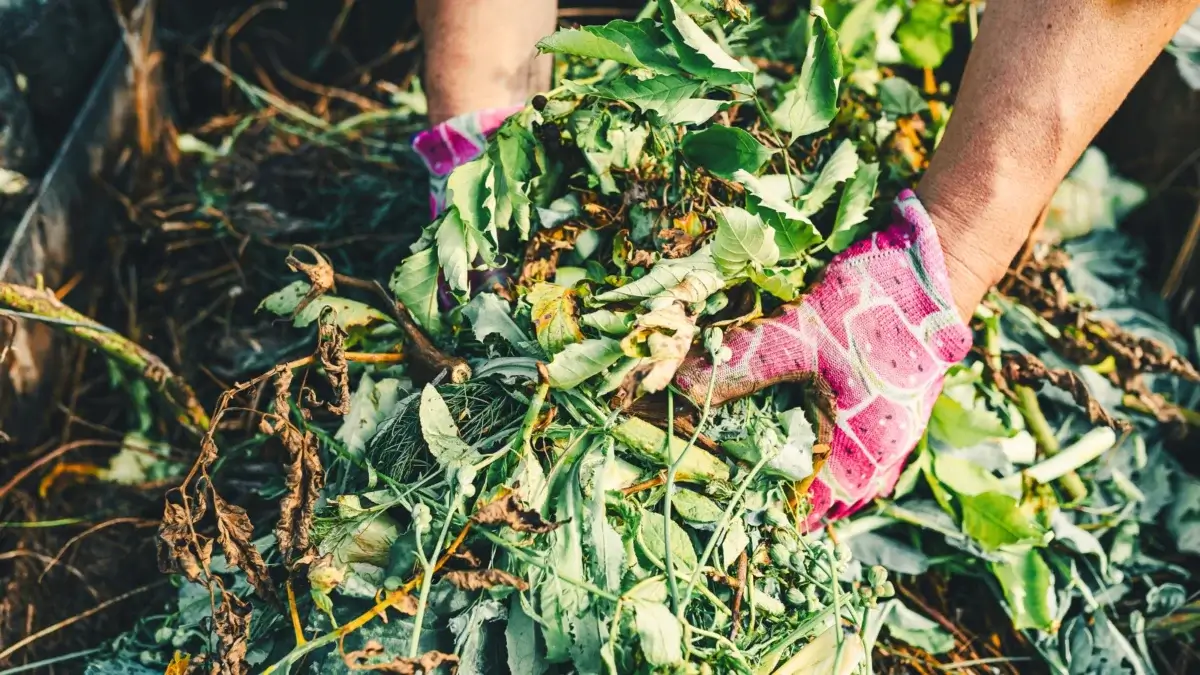
When we think about agriculture, we often focus on the end product: cotton for a t-shirt, hay destined to feed animals through the winter, or hamburgers for our summer barbecues. However, after we harvest the desired product, we’re left with agricultural waste like manure and plant debris.
Producers often see this waste as an unwanted burden to deal with. Do we bury it? Burn it? Send it to a different facility to handle?
Rather than spending time and money disposing of this waste, we can view it as another source of value. Taking on a creative mindset allows us to see the potential in these products and think about ways to create value in agricultural waste. Not sure where to start? Check out these ideas.
What Is Agricultural Waste?

Agricultural waste refers to any unwanted materials produced during the production of items like strawberries, pork chops, or alfalfa hay. These waste products include materials left over after harvest, such as corn stubble and tomato stalks, as well as animal manure. Some people also consider plastic packaging from fertilizers, pesticides, and other products as agricultural waste, but others exclude these products from the definition.
For the purposes of this article, we’re going to assume that agricultural waste refers to organic products produced during the production of goods. Some farmers burn or bury these products to dispose of them, which costs time and money. However, there are some ways you can create value from agricultural waste. Here are a few ideas to get you started.
Compost Organic Waste

One of the most obvious, yet still valued, ways to handle products like tomato stalks, palm fronds, and manure is to compost them. During composting, microorganisms and invertebrates break these materials down into smaller particles. Eventually, the once-large materials become a homogeneous substance filled with plant-available nutrients and beneficial microorganisms.
Any type of organic waste can be composted, including manure, leaves, wood chips, and food waste. Maintaining the proper carbon-to-nitrogen ratio and moisture level will help speed the composting operation and lead to a high-quality product, but any organic waste will break down over time.
Composting operations vary depending on the input materials, scale, and available resources. Large operations often pile the waste in long piles called windrows and turn these piles on a set schedule. Other options include blowing air into immobile piles, a process known as aerated static pile composting, vermicomposting with worms, and forming small piles in areas like community gardens and backyards.
After the waste is fully broken down and no longer produces heat, you can add it to the soil. Compost adds nutrients, introduces beneficial bacteria and fungi, improves soil drainage and water retention, and limits compaction and runoff.
Turn Carbon-Rich Waste Into Biochar

Biochar isn’t anything new—indigenous communities have been using it to enrich their soils for years. However, it has seen a spike in popularity in the last decade as people realize how it can improve soil and capture carbon. So, what is it?
Biochar is a charcoal-like material that’s formed when carbon-rich materials are burned without the presence of oxygen. This oxygen-derived, high-heat breakdown is known as pyrolysis. Traditionally, people would bury their crop residue and burn it during a process known as terra preta or black earth. However, it’s also possible to produce biochar by burning materials like wood and corn stalks in a sealed metal barrel.
Adding biochar to soils offers numerous benefits, and the material is an especially useful addition to poor soils. The small, carbon-rich, porous materials capture water and nutrients while capturing and sequestering atmospheric carbon. Biochar can also help remove harmful heavy metals and raise the soil pH. Therefore, it’s an especially useful addition to soils harmed by mining or heavy industry.
Produce and Capture Biogas

Burning waste materials is one way to generate heat, but what if we could capture the material’s stored energy in another way? Well, it turns out we can, and it’s an excellent way to create value from agricultural waste.
When materials like manure and food waste are broken down in anaerobic conditions, they release methane, a harmful greenhouse gas that traps 28 times more heat than carbon dioxide. Cows naturally release methane as they burp, but another sizable amount is created as manure sits in oxygen-deprived lagoons that keep this waste from leaching into surrounding waterways.
While the methane created via the anaerobic breakdown of organic materials can be a burden, capturing this gas allows us to heat our homes, power stoves, and more. Breaking down agricultural waste in an anaerobic digester creates biogas, a mixture of methane and carbon dioxide, and liquid and soil products known as digestate.
We can capture the biogas and use it directly as a fuel source, or further refine it to pure methane that can be used in areas with natural gas grids. The digestate can act as fertilizer, animal bedding, and a compost feedstock.
‘Waste Wool’ is a Burden for Farmers. What if it Could be a Solution Instead?
Sheep farmers across the US and Canada often end up burning, burying or stockpiling wool. Entrepreneurs, researchers and community groups are working to flip the script by transforming discarded wool into a different kind of fertilizer.

